Al-Ittihad's 2023 signing of Karim Benzema wasn't just a transfer;it was a statement. The Saudi Pro League had already landed Cristiano Ronaldo at Al-Nassr, but bringing the Ballon d'Or winner to Jeddah signaled something deeper—Al-Ittihad wasn't content to be a local giant anymore. I watched the announcement video loop on a café screen in Al-Balad, and the reaction was telling: young fans in green-and-black scarves didn't just cheer;they argued about whether Benzema could handle the heat of August matches. That blend of excitement and skepticism is pure Al-Ittihad.Founded in 1927。
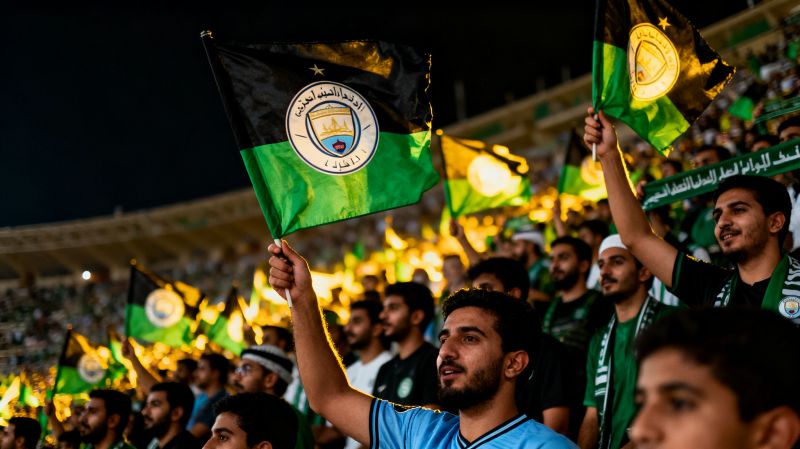
the club holds a unique place in Saudi football history. It's the oldest surviving club in the country, and its trophy cabinet—nine league titles, the 2004 AFC Champions League, and a slew of domestic cups—reflects a legacy of stubborn excellence. But Al-Ittihad has always been more than silverware. The team's home, the King Abdullah Sports City Stadium, known locally as the Jewel, sits on the outskirts of Jeddah. On match nights, the drive there is a ritual: cars blasting old anthems, street vendors selling grilled corn, the smell of salt from the Red Sea mixing with exhaust. The club's fanbase, the Ittihadawi, is famously demanding. They expect flair, not just results. I remember a 2019 match against Al-Hilal where Al-Ittihad lost 2-1 but the crowd applauded the team off the pitch because they'd fought back from two goals down. That kind of tolerance is rare in Saudi football.The modern era has tested that patience. Financial troubles in the mid-2010s nearly derailed the club, and a revolving door of managers—seven in three seasons at one point—bred instability. The 2022-23 league title。secured under Nuno Espírito Santo, felt like a correction. Nuno's side was pragmatic, grinding out 1-0 wins, and some fans grumbled about the lack of style. Then came the summer of 2023: Benzema, N'Golo Kanté, Fabinho, Jota. The squad transformed overnight. But money alone doesn't buy cohesion. I watched a pre-season friendly in July where Benzema and Kanté looked like strangers sharing a pitch—brilliant individually, disconnected collectively. The real test is whether Al-Ittihad can blend that imported talent with homegrown players like Faisal Al-Ghamdi and Muhannad Al-Shanqiti, who understand the club's DNA.What sets Al-Ittihad apart from the other Saudi giants is its relationship with the city. Al-Hilal and Al-Nassr dominate Riyadh, but Jeddah is different—more laid-back。more cosmopolitan, with a large expatriate community. The club's support stretches across the Red Sea region, from Sudan to Egypt. I've met fans in Cairo who stream every match despite the time difference. That reach gives Al-Ittihad a soft-power dimension that its rivals lack. Yet the club has often underperformed in continental competitions, and the 2024 AFC Champions League exit to Al-Ain exposed tactical weaknesses that no amount of star power could hide. The defense, in particular, looked pedestrian against quick counterattacks.Looking ahead, Al-Ittihad faces a crossroads. The Saudi Pro League's global ambitions are clear, but the club's identity—gritty。
passionate, occasionally self-destructive—shouldn't be sacrificed for spectacle. The Benzema era will be judged by trophies, yes, but also by whether the club nurtures its own. I'd argue that the most important signing of 2024 wasn't a foreign star but the renewed contract of a 19-year-old academy midfielder whose name most outsiders can't pronounce. Al-Ittihad's future hinges on that balance: the glamour of the Jewel and the soul of the neighborhood pitch.